| Effect or decision | Typical value or condition | Planning use |
|---|---|---|
| Water-heating electricity saved | At least 50% average reduction for a standard home | Use it as a baseline to judge whether the saving justifies the outlay. |
| Installed cost | $800 to $6,000 | The spread is wide, so collector type and system type decide where a quote lands. |
| Payback period | 5 to 15 years | Suits households that expect to stay in the home for a long time. |
| Climate | Usable in any climate | Freeze protection and collector choice matter more than location alone. |
| Solar fraction | Scale from 0 to 1 | Compare quotes by the share of hot water demand the solar system supplies. |
These figures come from the US Department of Energy’s solar water heater guidance and the cost and payback ranges on Ohio State’s solar hot water page.
How does solar water heating work? A collector absorbs sunlight as heat, a fluid or water carries it to a storage tank, and a conventional heater often tops up the remainder.
This guide sits within green technology for homes. It covers what a system changes in practice, the loop that moves heat from roof to tank, and how solar thermal differs from solar PV. For the electric alternative, see are heat pump water heaters worth it.
What a solar water heater changes in practice
A solar water heater reduces the electricity or fuel a household spends on hot water, but it rarely replaces the existing heater. The US Department of Energy states that a standard home sees an average of at least a 50% reduction in water-heating electricity use. That is an average for a standard home, not a guarantee for any single roof.
Share of hot water the system supplies
The share of hot water a system supplies is described by its solar fraction. Ohio State’s Green Home program defines the solar fraction as the proportion of water heating supplied by the solar system to the overall hot water demand, expressed from 0 to 1. A higher figure means the backup heater does less work. When comparing quotes, ask for this figure for the household’s own demand rather than relying on a general average.
Cost and payback
Ohio State’s page cites an installed cost range of $800 to $6,000 for a solar hot water heater, attributed there to HomeAdvisor, and a payback of 5 to 15 years. Both ranges are wide, so they are best used to frame a conversation with installers. The choices below pull the price up or down:
- Integral collector storage: this is the cheapest solar water heating system available, but it has the lowest efficiency. It suits a tight budget where peak performance is not the priority.
- Passive systems: they are less efficient than active systems but cost less upfront. They fit warm sites with modest needs.
- Evacuated tube collectors: they are the most expensive collectors. The extra cost is easiest to justify where conditions are extremely cold.
A long payback period favours owners planning to stay put. Anyone expecting to move within a few years should weigh that before choosing the dearest option.
Climate, cloud cover and freeze protection
Solar water heaters can be used in any climate, according to the Department of Energy. Cloud does not switch a system off, because solar water heating systems use both direct and diffuse solar radiation. The practical question is therefore less whether the system works and more which design suits local winters.
Output still varies through the year. Flat-plate collectors operate more efficiently during the summer months than in the winter months, so winter savings will be lower than summer ones on the same roof. Evacuated tube collectors are described by Ohio State as the most efficient collector type for extremely cold environments.
Choosing freeze protection
- Indirect circulation with antifreeze: the collector holds a secondary fluid, and because it uses anti-freeze, indirect circulation is a popular method for homes in colder climates, as an engineering firm’s explainer notes. It is the usual answer where freezing is expected.
- Direct circulation: the same explainer says these systems typically only work well in warm climates. Choose this only where freezing is not a concern.
- Passive systems in freezing regions: Ohio State states that these systems cannot work in the winter time in Ohio, so the system needs to be flushed to avoid collector damage. Treat them as seasonal there.
The heat-transfer loop from collector to tank
A solar hot water system has three main components: a solar collector, a distribution system and an optional heat storage unit. The collector turns sunlight into heat, the distribution system carries that heat, and storage holds it until hot water is needed.
Collector
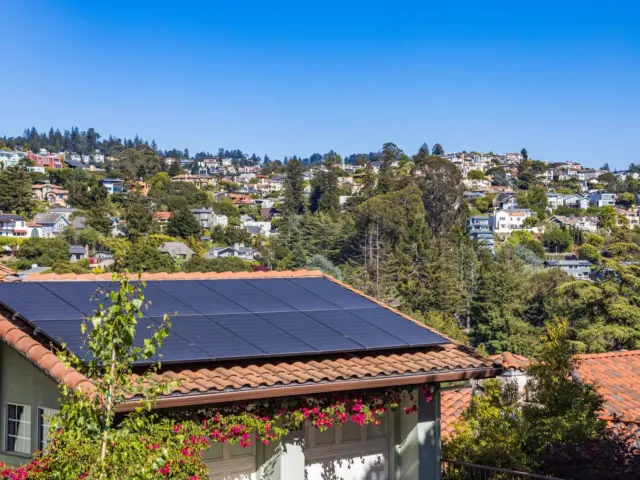
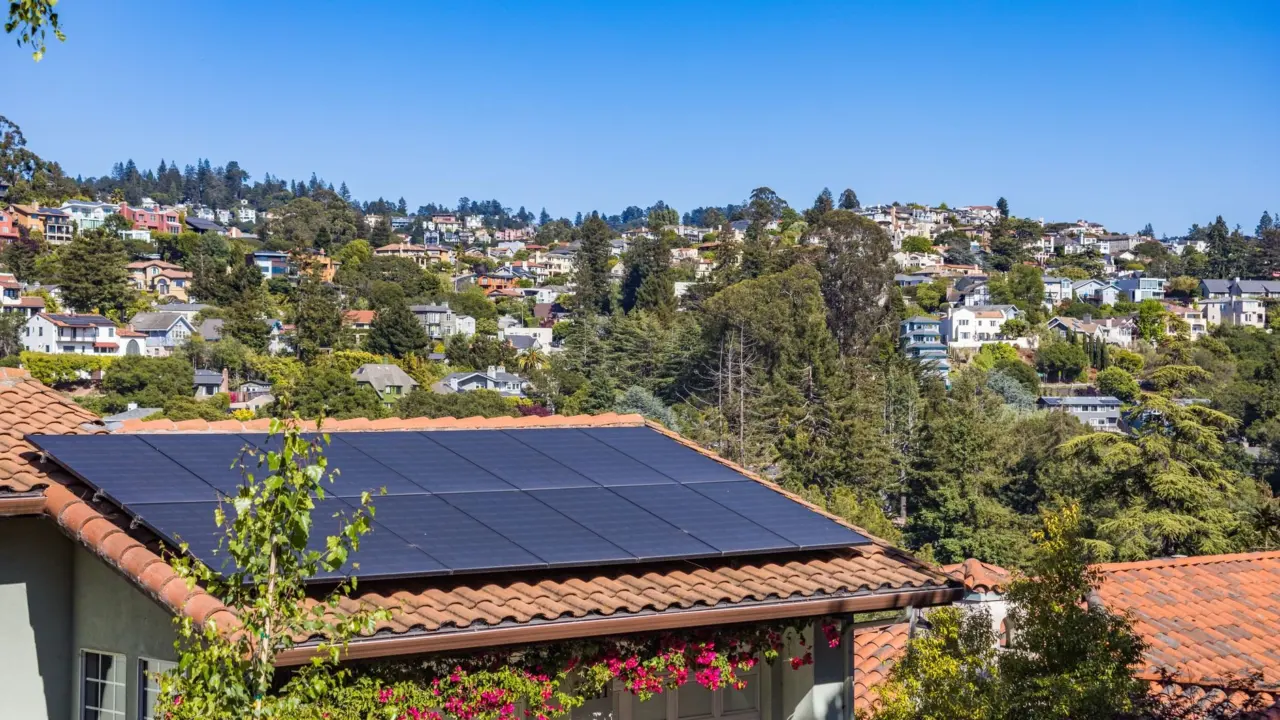
The collector sits on the roof or another sunny surface and absorbs solar radiation as heat. It is a thermal device and does not consist of photovoltaic cells. Flat-plate collectors are the most common type, and evacuated tube collectors are the alternative for harsher cold.
Distribution and heat exchange
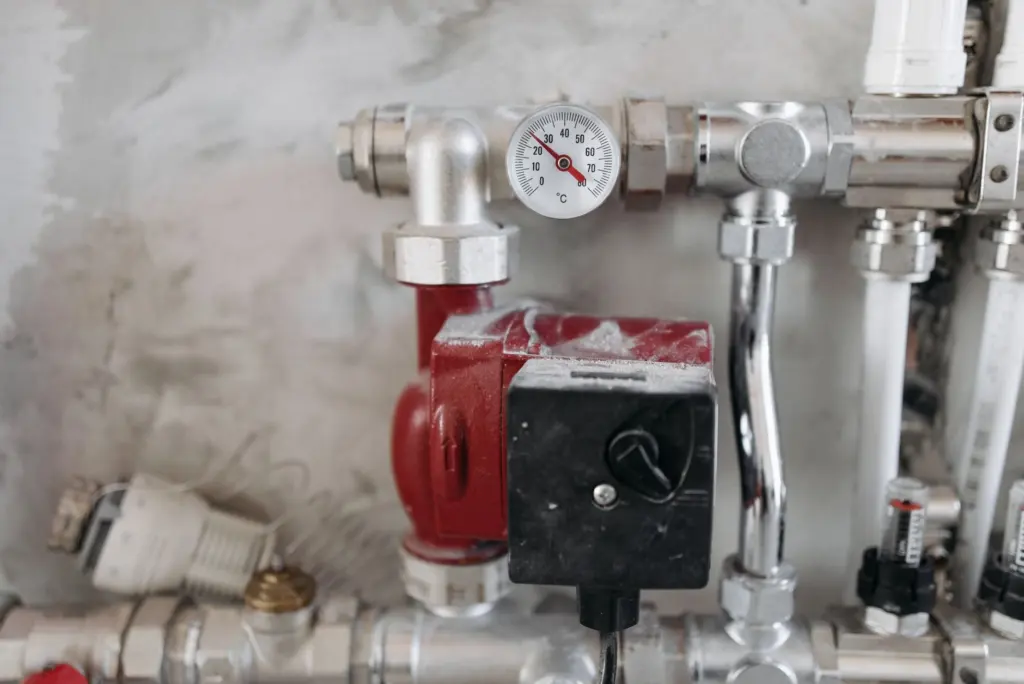
In an indirect active system, a secondary fluid circulates through the solar collector, and a heat exchanger passes that heat on to the household water. Keeping the two liquids separate is what allows an antifreeze mixture to protect the roof loop. Active systems use pumps, valves and controls to move water through the system, which is why a pump station and controller sit near the tank.
Storage tank and backup
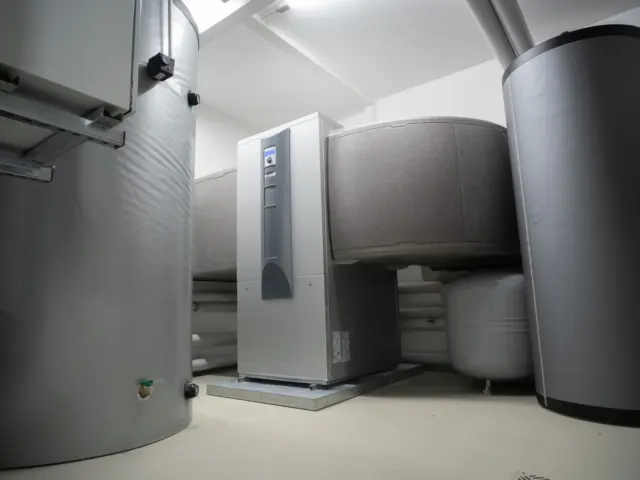
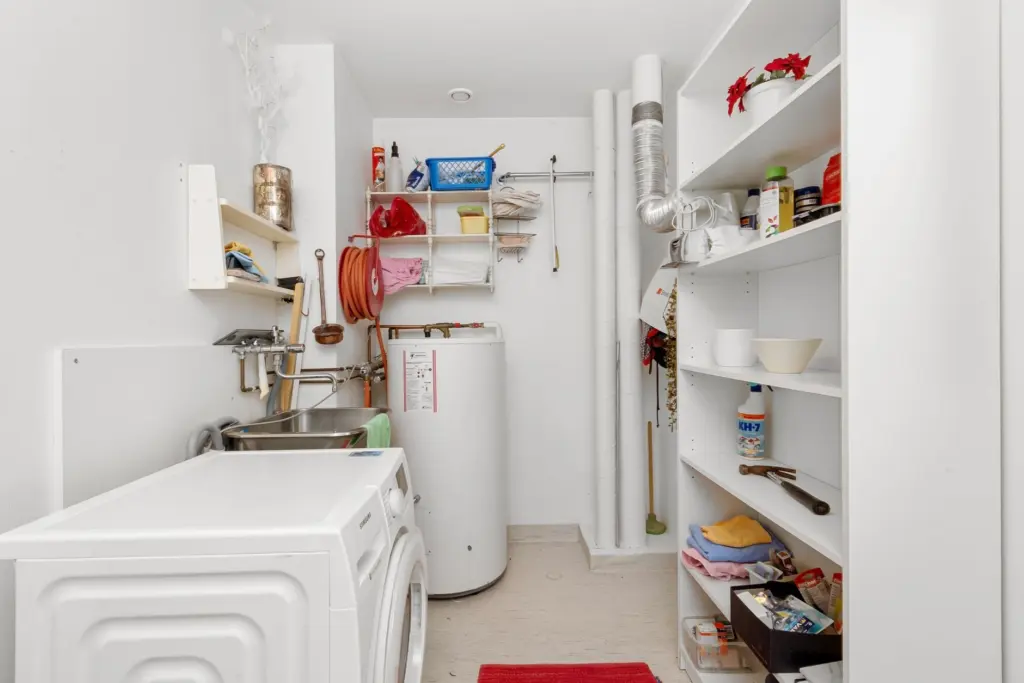
A hot water storage tank is the most common heat storage option and can be supplied actively or passively. Conventional storage water heaters often provide backup and may already be part of the solar system package, so hot water remains available when sunlight is weak.
Collector and system types compared
The main choices are the collector, which sets efficiency in cold weather, and the circulation method, which sets cost and freeze tolerance. Matching both to the local climate matters more than choosing the most advanced option.
- Flat-plate collector: the most common collector, and the one that loses most output in winter. It suits households whose main hot water demand is in the warmer months.
- Evacuated tube collector: the best performer in extremely cold environments, at the highest collector price. It suits cold sites where winter output is the priority.
- Active systems: they use pumps, valves and controls, and cost more upfront but are more efficient than passive designs.
- Passive systems: they have no mechanical elements, cost less upfront and are less efficient. They suit mild climates and modest budgets.
Solar thermal compared with solar PV
Solar thermal collects heat directly, while solar PV converts sunlight into electricity using photovoltaic cells. A solar water heating collector does not contain those cells, which is why a thermal collector and a PV panel are different products even when both sit on a roof.

The decision comes down to what the household wants from the roof. A thermal system is dedicated to hot water and needs a tank and a loop of pipework. A PV array produces electricity for the whole home, and it can feed an electric water heater such as a heat pump unit, a route covered in are heat pump water heaters worth it. For a wider look at roof-mounted PV options, see solar panels vs solar shingles.
Frequently asked questions
Which direction should a collector face?
The Department of Energy states that the optimum orientation for a solar collector in the northern hemisphere is true south.
What is a solar energy factor?
It is a performance rating for solar water heaters. Ohio State’s Green Home program notes that typical systems have a solar energy factor of around 2 or 3.
How does a passive tank move water without a pump?
In a thermosyphon arrangement, the tank is installed above the solar collector so warm water rises as cool water drops, so no pump is needed.
Does a solar water heater still need a conventional heater?
Often, yes. Conventional storage water heaters commonly provide backup and may already be included in the solar system package.