Choosing among eco friendly flooring options comes down to sourcing, certification and indoor emissions: cork, bamboo, reclaimed wood and natural linoleum all qualify, provided the adhesive and finish are low-VOC and the product carries FSC or FloorScore labels.
Picture a renovation where the subfloor is ready and the floor has to handle a wet kitchen, a busy hallway and a living room that should feel warm. The shortlist below ranks each material on the same terms. Flooring is one decision within how to build a green home, and green building guidance identifies material extraction and production, plus indoor air quality effects, as the main points of distinction between floors.
Shortlist at a glance
| Material | Sourcing or lifespan figure | Main strength | Planning use |
|---|---|---|---|
| Cork flooring | Harvested every 9 to 12 years | Resists water, mould and mildew | Kitchens, bathrooms and rooms where a softer surface is welcome |
| Bamboo flooring | Can be harvested for flooring in as little as three to five years | Harder than hardwood | Hallways and busy living areas |
| Reclaimed wood | Reused from demolition and refurbishment projects | Boards are already seasoned | Living rooms and bedrooms where character matters |
| Natural linoleum | Lasts 20 to 40 years | Biodegradable, made from cork dust, limestone and linseed oil | Long-term floors where a European supply chain is acceptable |
Figures come from a supplier flooring guide, with material composition and renewability points drawn from green building flooring guidance.
Cork flooring
Cork flooring is the strongest all-round pick for rooms that see water. Cork is harvested every 9 to 12 years, and the same tree can be harvested for 200 years, which makes it a highly renewable resource according to this flooring guide. The same guide notes that cork resists water, mould and mildew, so it can suit kitchens and bathrooms.
On durability, green building guidance describes cork as softer than hardwood but just as durable as wood. Cork can also be FSC-certified. It suits households that want a forgiving surface and a renewable material. The trade-off is that it is the softer surface of the pair, so choose bamboo if maximum hardness is the priority.
Bamboo flooring
Bamboo flooring suits busy rooms where hardness matters most. Bamboo can be harvested for flooring in as little as three to five years, while hardwood timbers can take 25 years or more to mature, according to the same supplier guide. Bamboo is rapidly renewable, can be FSC-certified and is harder than hardwood, as green building guidance explains.
Bamboo is also described as durable and moisture-resistant, and it comes in a range of styles and colours, per a flooring retailer’s overview. Its main weakness is what holds it together. Bamboo flooring made with glues containing VOCs is the version to avoid, so the adhesive information is as important as the species. Ask for the manufacturer’s technical data sheet, which is where hardness ratings and emissions details are normally published.
Cork versus bamboo: choosing for your room
Cork and bamboo are both renewable alternatives to hardwood, so the decision rests on how the room is used. These points separate them:
- Durability. Bamboo is harder than hardwood, while cork is softer but as durable as wood. Pick bamboo for the toughest surface and cork for a softer one.
- Moisture tolerance. Cork is specifically noted for resisting water, mould and mildew, which makes it the safer starting point for bathrooms and kitchens. Bamboo is described as moisture-resistant, so it is a reasonable second choice in damp-prone areas.
- Renewal speed. Bamboo reaches harvest in as little as three to five years. Cork is harvested from the tree every 9 to 12 years without felling it.
- Cost. Prices vary by brand, thickness and installation method. Compare like-for-like quotes that include the underlay and adhesive rather than the board price alone.
Reclaimed wood flooring
Reclaimed wood flooring is a sustainable choice because it reuses timber that already exists. A supplier guide calls reclaimed boards obviously eco-credentialed, with the added bonus of being seasoned, so they will not warp after installation.
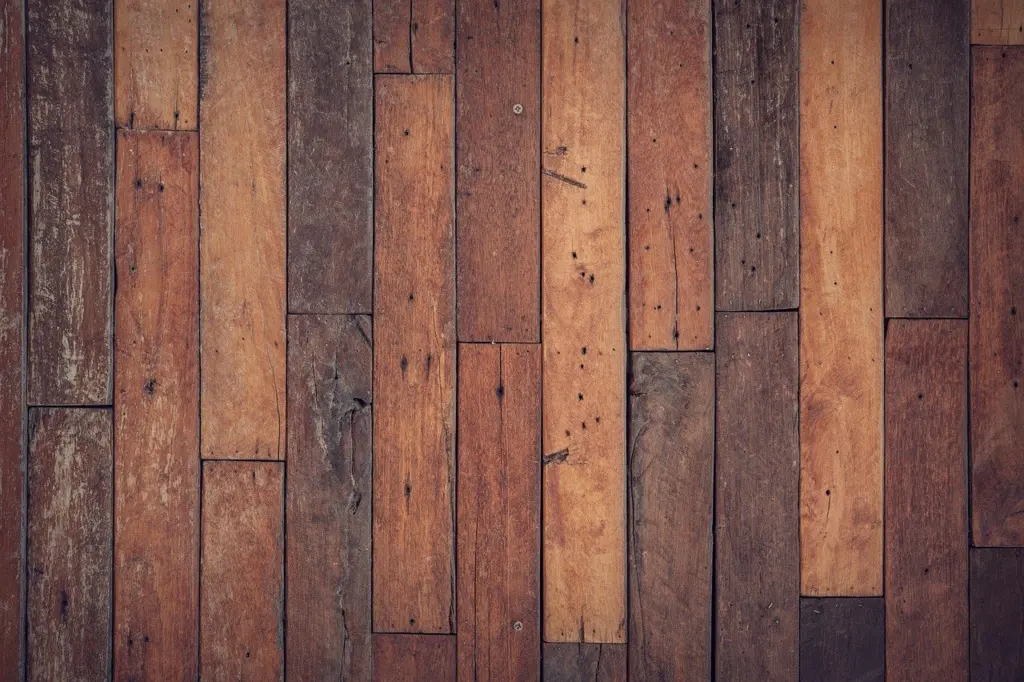
Salvage yards often sell reclaimed wood flooring from demolition and refurbishment projects, and specialist suppliers stock it too. It suits anyone who wants visible character and is comfortable with an irregular, worn surface. The limit is consistency: boards vary, so inspect them in person and ask where they came from. A fresh finish and adhesive still go onto reclaimed boards, so the emissions questions later in this guide apply to them as well.
Natural linoleum
Linoleum is the shortlist’s non-wood option and is often confused with vinyl. True linoleum is a biodegradable material made from cork dust, limestone and linseed oil, and it lasts 20 to 40 years according to the supplier guide. Green building guidance contrasts it with vinyl, which is made of petroleum, is not recyclable and tends to off-gas harmful chemicals.
The catch is distance. True linoleum is only manufactured in Europe, which increases its transport footprint. It suits readers who value a long-lived, biodegradable floor and who prefer it to vinyl in utility rooms and kitchens. If a short supply chain matters more to you than composition, a locally available reclaimed floor may serve better.
Certified new timber and FSC
When you buy new wood, the Forest Stewardship Council (FSC) label is the sourcing check. Green building guidance advises purchasing wood that is formaldehyde-free and certified by the FSC. Those are two separate tests, one about the forest and one about indoor air, so a board needs to pass both.
FSC certification is not limited to hardwood boards. Bamboo and cork flooring can also be FSC-certified, so ask for the certification on the specific product rather than assuming it from the material.
Certifications and emissions labels
FloorScore is the label most directly aimed at indoor air. It is an indoor air quality certification scheme for hard flooring materials, adhesives and underlays, and certified products are independently certified by SCS as low emitting for VOCs with potential health effects, as the supplier guide explains. Its coverage of adhesives and underlays makes it useful beyond the board itself.
Green building guidance names Green Label Plus, Greenguard, FloorScore and Cradle to Cradle certifications as helpful for finding healthier flooring. A practical way to use them is to match each label to a job:
- FSC. Use it to check where new timber, bamboo or cork comes from.
- FloorScore. Use it to check emissions from hard flooring, adhesive and underlay together.
- Greenguard, Green Label Plus and Cradle to Cradle. Treat them as additional evidence of healthier products when a flooring line carries them.
Finishes and adhesives
A low-VOC finish and adhesive belong in the flooring decision, because indoor air quality is one of the two main points on which floors differ. Select flooring products with low volatile organic compound (VOC) emissions, as a flooring supplier’s sustainability guide advises.
In practice, that means asking three questions before you order:
- What glue holds the product together? Bamboo flooring with VOC-containing glues is the version to skip.
- What adhesive and underlay will go under it? Choose ones covered by an emissions certification such as FloorScore.
- Is the wood formaldehyde-free? This is the second half of the advice to buy FSC-certified wood.
Decision checklist
- List the room’s demands first: wet exposure, foot traffic and how soft you want the surface.
- Match the room to a material from the shortlist above.
- Check the sourcing evidence: an FSC label for new timber, bamboo or cork, or a clear provenance for reclaimed boards.
- Ask for FloorScore or an equivalent emissions certificate covering the floor, adhesive and underlay.
- Confirm that the finish and adhesive are low-VOC and the wood is formaldehyde-free.
- Set the budget alongside your other upgrades, and see home energy efficiency tax credits for which wider projects may attract support.
Frequently asked questions
Should I avoid cork with a vinyl backing?
Yes. Green building guidance advises avoiding cork-vinyl composites, because vinyl is petroleum-based, not recyclable and tends to off-gas harmful chemicals. Look for solid cork products instead.
Does FSC certification mean a floor has low emissions?
No. FSC certification addresses forest sourcing, while emissions are covered by labels such as FloorScore. The same guidance recommends wood that is both FSC-certified and formaldehyde-free.
Is natural stone an eco-friendly alternative?
It can be a long-lived one. Limestone, slate or granite flooring can last 100 years or more, according to a supplier flooring guide. Because extraction and production are among the main points of difference between floors, check how the stone was sourced before choosing it.
Which certifications cover adhesives as well as flooring?
FloorScore covers hard flooring materials, adhesives and underlays, so it is the most useful label when you want the whole installation assessed for VOC emissions.