
| Your situation | Passive measures to start with | Planning use |
|---|---|---|
| You can work on the house before summer | Keep outdoor cooling units clear and trimmed around, and clean fan blades so they move air better | Finish these low-cost jobs before the first hot spell. Leave roof and attic work for the next maintenance cycle. |
| A heatwave is in the forecast | Shade the windows that take direct sun and close curtains and blinds during the hottest hours | Do this the day before, because it is far easier to keep heat out than to remove it. |
| A heatwave is under way and you have no air conditioning | Close doors and windows at peak daytime temperatures, open them as night air cools, and limit outdoor activity to morning and evening | Work to a day-and-night routine rather than a single fix. |
| You rent or cannot alter the building | Use interior curtains and blinds, clean fans, box fans as exhaust, and cool public places | Concentrate on habits and portable equipment, and raise permanent upgrades with the landlord. |
The measures above draw on US EPA extreme heat guidance and a home-cooling guide for heatwaves.
How to protect your home from extreme heat comes down to passive measures first: keep sun off windows and roof, vent hot air from the attic, and ventilate at night. Which steps apply depends on whether you can alter the house.
Heat is one of several pressures a house faces, and the question of how do homes contribute to climate change sits alongside this one. Work through the situation below that matches yours.
If you can change the house before summer
Owners with time get the most from permanent passive cooling, because roof, attic and landscape measures work every hot day without being switched on. These suit any home where you control the roof, the loft space and the garden.
A cool roof at the next re-roof
Reflective or “cool roof” materials help deflect sunlight and reduce heat absorption. Dark roof colours do the opposite: they absorb heat and raise the temperature of the attic, which warms the rooms below.
Whether a cool roof lowers indoor temperatures noticeably depends on the house. A construction industry review notes that energy savings are contingent on building use, geographic location, roof size and orientation. Savings are greater in southern climates and on buildings with lower levels of insulation. The same review warns that savings reported in earlier studies may not be achieved today, because insulation practice has improved since then.
The practical judgement follows from that. A cool roof is a strong choice for a warm-climate house with thin insulation that needs re-roofing anyway. It is a weaker reason to replace a sound roof on a well-insulated house in a cooler region. At community scale, EPA lists cool or vegetated roofs among its heat-island strategies, so the benefit is not limited to one building.

Attic ventilation and insulation
Attic ventilation lets hot air escape through ridge or roof vents while drawing in cooler air from soffit vents. Both openings matter, because the outlet only works when replacement air can enter lower down. Adding or upgrading attic insulation is described in the same guidance as one of the simplest efficiency improvements.
Choose this pairing if upstairs rooms stay hot into the evening, since the attic is the space directly above them. It is also a sensible job to do alongside a roof repair, when access is already arranged.
Shade trees on the sunny side
Deciduous trees, which lose their leaves in late autumn, produce shade in summer and let winter sun through. That makes them a better match for a house than evergreens, which would also cut winter light. Trees take years to grow, so plant early and rely on awnings or shutters in the meantime.
If a heatwave is forecast
With a few days’ notice, the aim is to stop sunlight becoming heat inside the house. These steps need no building work and suit owners and renters alike.
Which windows to shade first
Solar heat gain is the main reason a closed house still warms up. The sunlight entering through windows is mostly converted to heat indoors, so shade the windows that receive direct sun during the hottest hours first. Rooms you occupy in the afternoon and bedrooms come ahead of rarely used rooms.
Interior curtains and blinds closed during those hours help. Exterior shading acts earlier, stopping sunlight before it passes the glass, so it is the stronger principle where you can fit it. Treat interior coverings as the quick measure for tomorrow and exterior options as the upgrade.
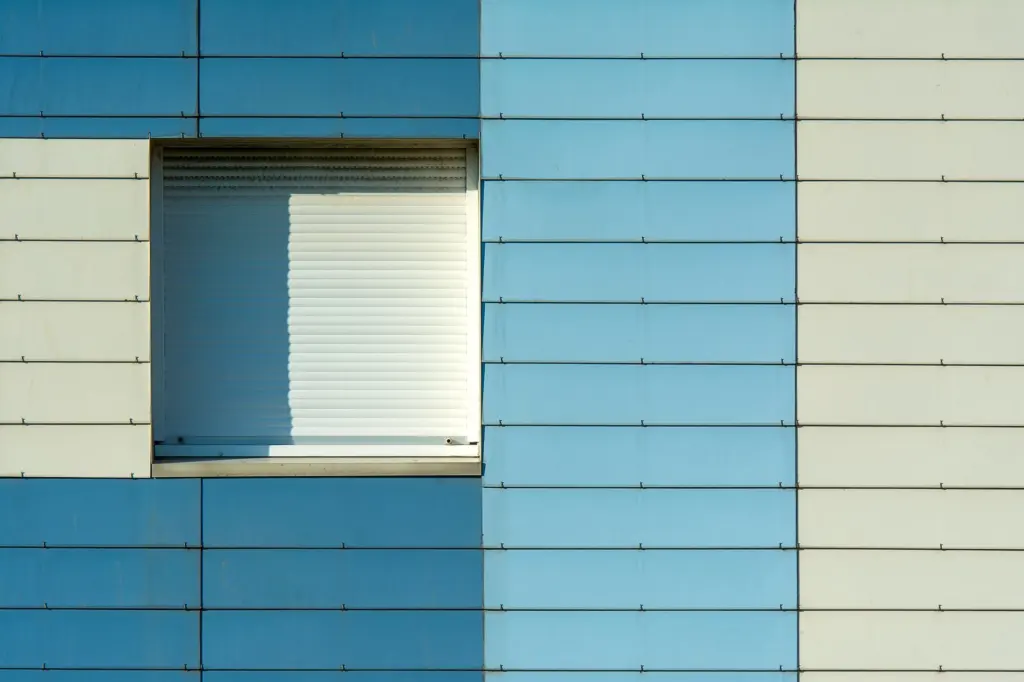
Awnings, shutters and other exterior shading
- Awnings: suit windows in direct sun that you still want to see out of, since they shade the glass while leaving the view open.
- Roller shutters: suit bedrooms and rooms you can close off by day, because they block most of the window when lowered.
- Trees and planting: suit owners planning ahead, as covered above, but give no help in the first summers after planting.
Check cooling equipment and fans
EPA advises homeowners to clean and trim around outdoor HVAC units so air can flow freely. It also recommends cleaning fan blades so the motor works efficiently and moves air better. Do both before the heat arrives, since a blocked unit or dusty fan fails when you need it most.
If you have no air conditioning during the heatwave
Without air conditioning, the routine is to seal the house against daytime heat and flush it with cooler air after dark. This is also the right plan for renters.
Daytime: close up and stay out of the sun
During peak daytime temperatures, close all doors and windows and keep curtains and blinds shut. Opening windows on a hotter day only brings in warmer air. EPA advises limiting outdoor activity to morning and evening and spending time in cool public places. If you do go out, stay out of direct sun and wear sunscreen of SPF 15 or higher.
Night purge ventilation
Night purge ventilation means opening windows once the outdoor air is cooler than the air inside. The cool-down guidance says that as the temperature outside lowers at night, you can open windows to promote air circulation. A box fan placed to push hot air outside can act as an exhaust, drawing cooler air in through other open windows.
Open windows on opposite sides of the house where you can, and close them again in the morning before the sun climbs. The routine works only when nights actually cool, so keep an eye on the overnight temperature.
Recognise when heat becomes an emergency
EPA states plainly that heat-related illness can cause death, and that you should call 911 if you need emergency help. Home measures lower risk but do not replace getting out of a house that has become dangerously hot. Move to a cool public place if the house cannot be kept bearable.
Why your location changes the plan
Built-up areas run hotter than the countryside around them, so a city or suburban house starts each heatwave at a disadvantage. EPA describes a heat island as a zone 2-10 degrees F warmer than the surrounding rural countryside. Another home-safety guide gives a narrower range, saying buildings and roads can make urban areas hotter than outlying areas by 1 to 7 degrees Fahrenheit. The two figures differ, so treat them as a rough range rather than a prediction for your street.
Heat islands appear when natural vegetation is replaced by built surfaces, a point made in the cool roof review cited earlier. That is one reason shade planting and reflective roofing are worthwhile on dense streets. To judge how exposed your own address is, start with how to check climate risk for a house.
Heat is not the only hazard. If your property also sits in a flood-prone area, read how to flood proof your home, because some steps, such as ventilation and shading choices, are worth planning together.
Frequently asked questions
| Question | Answer |
|---|---|
| What counts as a heatwave? | One home-safety guide defines it as a period of high heat and humidity with temperatures above 90 degrees for at least two days. |
| What is a radiant barrier? | It is a product designed to reflect heat away from your home. Roofing guidance lists it as an option for keeping the roof space cooler. |
| Do I need to keep windows shut all day? | Not all day. Close them at peak daytime temperatures, then open them at night as outdoor air cools to promote circulation. |
| Do cool roof savings apply everywhere? | No. They are greater in southern climates and on buildings with lower levels of insulation, and they depend on building use, location, roof size and orientation. |