Searching start netcurtains.org leads to a parenting and pregnancy advice blog, not a curtain shop and not a mail login page. The blog also carries guides on sheer window curtains, plus many posts whose titles copy the domain name in odd forms.
| Question | Short answer |
|---|---|
| What is netcurtains.org? | A blog on parenting tips, child development and pregnancy advice. |
| Is it a store for net curtains? | No. It lists a few net curtain buying and care guides among its posts. |
| Is there a visible “start” page? | The home page and an About Us page with a newsletter signup are the entry points. |
| Why do titles contain @, // or #? | Many post titles repeat the domain in different spellings. |
| Who runs it? | The site does not state who runs or owns it. |
| Is every post on topic? | No. The home page also lists posts on unrelated subjects. |
What netcurtains.org is and how it presents itself
The site netcurtains.org presents itself as a parenting resource. Its About Us text welcomes readers to NetCurtains as a “trusted resource for parenting tips, child development insights, and pregnancy advice,” and it states a mission to give parents practical knowledge and support.
The home page headline reads “Child Care Experts” alongside the line “Create and Enhance Comprehensive Early Childhood Systems.” Visible sections include Pregnancy & Prenatal Care and Editor’s Picks. The About Us page offers a newsletter subscription covering parenting tips, child development updates and pregnancy advice.
Recent posts include a piece on sunless tanning during pregnancy, one on healthy pregnancy cravings, one on how early a pregnancy test works, a guide to looking after yourself in pregnancy, a post on the fourth trimester, and one on finding prenatal care doctors nearby. Most parenting posts carry an individual author name, which is the only attribution a reader sees.
That is the whole context for the search. People who type the bare address, with or without “www”, land on this blog. Nothing on the home page presents it as a shop, a bank, a webmail service or a login portal.
How the domain name turns up in post titles
The home page contains many post titles built from variants of the domain name. This is the most unusual feature of the site, and it explains why so many strange searches end up here.

Titles seen on the home page use forms such as “@netcurtains.org”, “//netcurtains.org”, “NettCurtains.org”, “Net-Curtain.org Exposed” and “NetCurtainsOrg”. Two titles go further: one is a guide titled “How To Use – @ netcurtains org – Email Setup, Troubleshooting, And Safety (2026 Guide)”, and another is “Getting Started With” an address in an email-style form, described as a quick setup and troubleshooting guide.
Readers type these forms in many ways. The searches below all point to the same blog:
- Bare and prefixed forms: netcurtains.org, www.netcurtains.org and www. netcurtains.org with a stray space.
- Spacing slips: netcurtains. org, with a space after the dot, and start netcurtains org, with no dot at all.
- Symbol forms: @netcurtains.org, @ netcurtains.org, @ netcurtains org, #netcurtains.org, # netcurtains.org and # netcurtains org.
- Slash forms: //netcurtains.org, // netcurtains.org and // netcurtainsorg.
- Run-together form: netcurtainsorg.
- Phrase forms: the netcurtains.org, the @netcurtains.org, the @ netcurtains.org, start @netcurtains.org, posts netcurtains.org and posts @netcurtains.org.
The symbols matter little. An “@” suggests an email address. A “#” suggests a social tag. A “//” suggests the tail of a web link. None of them changes the site’s identity. They are different ways to type one name.
Reading the netcurtains email-style posts with care
A post title that contains an address-like string is not proof that a mail service exists behind it. A title using the form “@ netcurtains org” or the form of a mailbox name tells you only that an article carries those words.
The home page lists these posts as guides to setup, troubleshooting and safety. Nothing visible there defines what a netcurtains.org email account is, who issues it, or how a person would get one. A reader should treat the phrase “email setup” in a title as a topic label, not a service listing.
Practical steps help anyone who lands on such a post and wonders whether it applies to them:
- Identify your actual provider. Your mailbox belongs to whoever hosts your mail, such as your employer, school or a mail company you chose. Start from their own help pages.
- Do not enter mail passwords on a blog. A blog post should never need your password. If a page asks for it, close it.
- Check the sender, not the title. A message using a domain-style name in its subject line is not necessarily from the domain.
- Use the provider’s own settings pages. Server names and ports come from the provider, not from third-party articles.
Generic safety rules like these hold whether or not a post is accurate. They also protect you if a lookalike site copies the same titles.
Checking the real netcurtains address and its lookalikes
The correct spelling is netcurtains.org: the word “netcurtains,” a dot, and “org,” with no spaces and no symbols. Anything else is a typing variant or a different site.

Titles on the home page show how easy it is to drift. “NettCurtains.org” adds a letter, and “Net-Curtain.org Exposed” adds a hyphen and drops an “s”. These are title texts, not confirmed separate sites, but they show the kind of near-miss spellings to watch for.
A short checklist
- Read the address letter by letter. Look for doubled letters, hyphens and missing plurals.
- Look at the ending. The ending should be .org and nothing appended after it.
- Type, do not follow. Enter the name yourself rather than tapping a link in an unexpected message.
- Be wary of “exposed” or “login” wording. Dramatic titles often aim at search traffic, not at help.
- Never reuse a password. If you do sign up for the newsletter, use an address you can afford to lose.
- Expect no dates. Many titles include “2026,” but the pages give no publication dates, so the year in a title is not a reliable freshness signal.
Where netcurtains.org meets the green home reader
Most of the site has little to do with building or running a sustainable home, and the facts do not show it serving that field. The connection is narrow and sits in one group of posts: the net curtain guides.
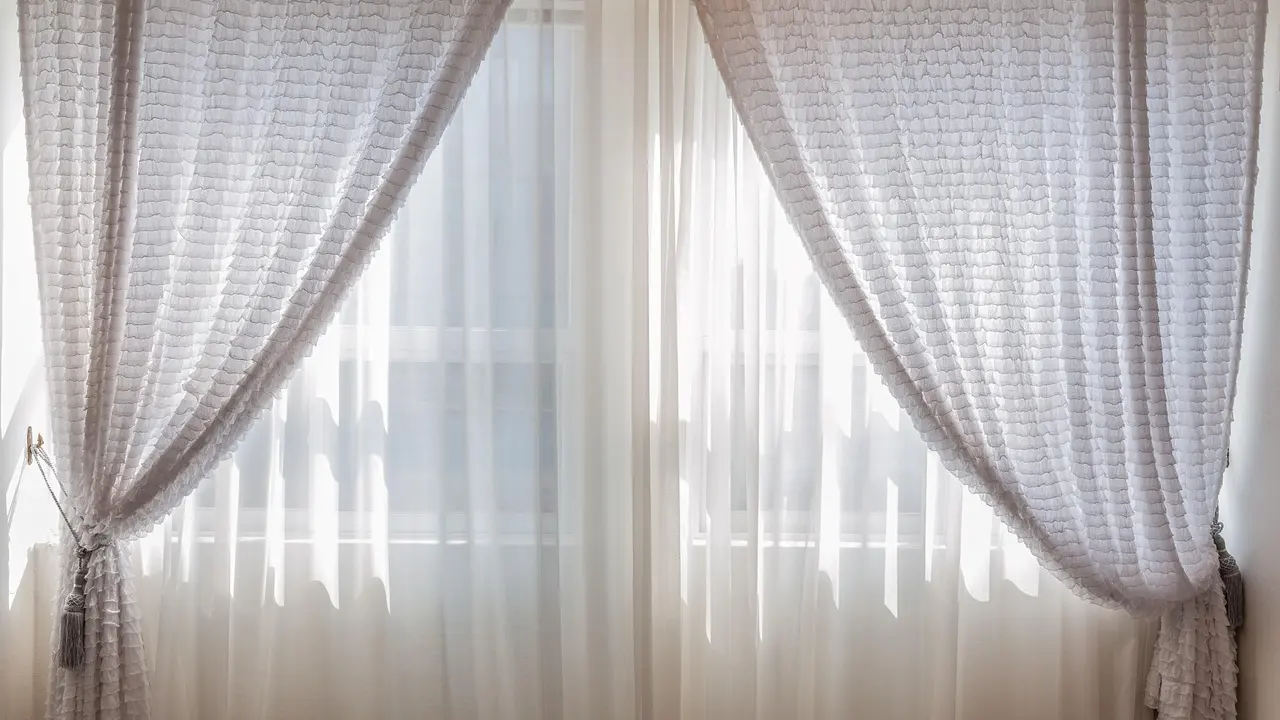
The home page lists buying and care guides, including “How to Wash and Care for Net Curtains” and “How to Hang Net Curtains Correctly.” A longer guide covers choosing, measuring, installing and caring for sheer window curtains. For a reader interested in green home development, sheer window coverings are a small part of how a home handles light and privacy.
General points apply to any such guide, whatever its source:
- Daylight: Sheer fabric lets light in while softening glare, which can reduce the need for lamps in daytime. This is general knowledge, not a claim from the site.
- Care: Washing at lower temperatures and air drying are common ways to cut a household’s laundry energy.
- Longevity: Careful measuring before buying lowers the chance of returns and waste.
- Limits: Net curtains do little for insulation. Heat loss at windows is a matter for glazing, seals and heavier linings, and a reader should look to energy-efficiency sources for it.
Judge any care or fitting guide there by whether it names fabric types, gives measuring steps, and warns about shrinkage.
Why a parenting blog carries this much mixed content
The site mixes many unrelated topics, which is a reason to judge each page on its own merits. Beside the parenting and pregnancy material, the home page lists posts on cosmetic injections, legal services, life insurance, nursing degrees and a follower-growth service for social media.
A reader can draw careful conclusions from that mix. A parenting post and a legal or insurance post on one site do not share expertise just because they share a header. Health topics deserve extra care: the pregnancy posts are general reading, not medical guidance, and questions about a pregnancy, a test result or a treatment belong with a qualified clinician.
Author attribution also needs a sensible reading. Most parenting posts are credited to individual names, yet no biographies appear alongside them. A byline is therefore a label, not a credential.
A short habit helps: for every article, find the claim you would act on, then confirm it against a health service, a government guide or a professional body. Treat the blog as a starting point for questions rather than the last word.
Who netcurtains.org suits and who should look elsewhere
The blog suits casual readers who want broad, plain-language parenting and pregnancy reading, plus anyone who landed on a net curtain care guide and wants basic washing or hanging steps. It also suits people who typed a variant of the address and simply want to reach the right page.
It suits less well anyone who came for an email login. The visible material gives no sign of a mailbox service, so a person trying to read or send mail should return to their own provider. It also suits less well anyone who needs dated or medically reviewed information, since many titles say “2026” but the pages carry no publication dates.
Readers focused on green home development should look elsewhere for core topics such as insulation, heating, renewable energy and building materials. The blog’s value for them is limited to the net curtain posts.
Short answers on typing and finding the site
Is start netcurtains.org a real sign-in page?
No sign-in page appears in what the site shows. The word “start” is part of how people phrase the search. The visible entry points are the home page and an About Us page with a newsletter signup.
Does the @ in “@netcurtains.org” mean it is an email service?
No. The symbol appears in post titles, and by itself it proves nothing about mail. Treat it as a typing variant.
Do spaces such as “netcurtains. org” change the destination?
A spaced form is a typo of the same name. Remove the space and the symbols to reach the intended address.
Can I rely on the year in a title?
No. Many titles say 2026, yet no publication dates appear, so check any time-sensitive advice against a dated, official source.
What should I do before subscribing to the newsletter?
Read the About Us text, confirm the address you typed, and use a spare email address. The newsletter covers parenting tips, child development updates and pregnancy advice, so expect that scope and nothing broader.