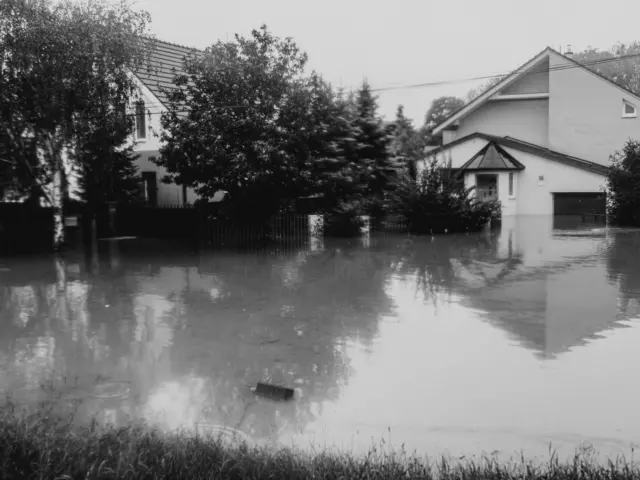
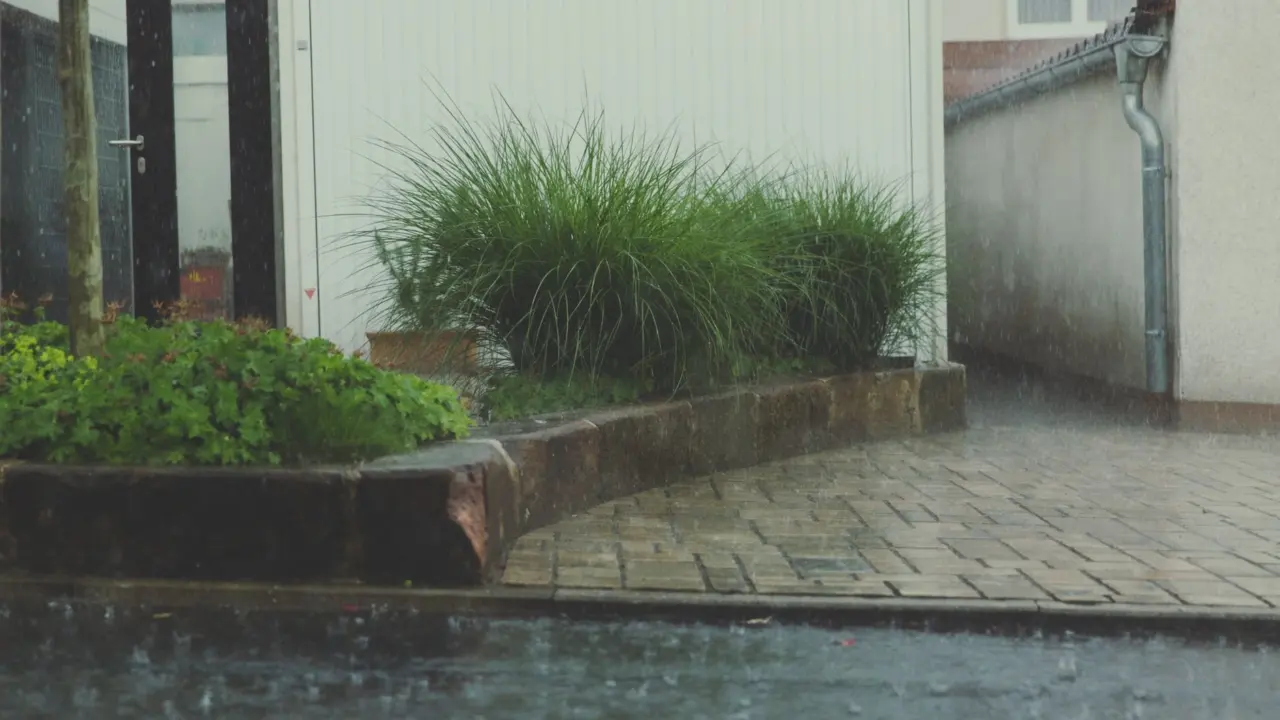
After a heavy storm, water from the roof races across the patio and pools at the edge of the yard. Stormwater management for homeowners starts with tracing that path, then escalating one step at a time.
Quick answer: Map where roof and yard water travels, then disconnect downspouts and mulch beds. Add a rain barrel if the roof still sends too much water downhill. Build a rain garden only if the site and soil pass the checks below. Stop at the step that solves the problem.
Stormwater is one home-level response within the wider topic of how do homes contribute to climate change and how they can adapt.
Start by tracing where roof and yard water goes
Penn State Extension’s stormwater management guide begins with how stormwater flows across and leaves a property, and builds the runoff-reduction steps on that. Every later decision, from barrel size to rain garden location, depends on this map.
Walk the property during or just after a rain and note four things:
- Roof outlets: where each downspout discharges, and whether it lands on paving or on soil.
- Hard surfaces: which patios, paths or driveways shed water onto lawn or toward a neighbour.
- Pooling spots: where water collects and lingers.
- Exit points: where water leaves the property.
Existing trees also count. Piedmont Master Gardeners report that mature trees take up an average of about 20 percent of annual rainfall in their canopy. A healthy mature tree is a stormwater asset worth protecting while you plan the other changes.
First rung: disconnect downspouts and slow the flow
Downspout disconnection is the cheapest change and the best starting point for how to stop yard runoff. A municipal stormwater program advises you to disconnect downspouts so roof water runs onto a splash block and into landscaped areas rather than straight onto pavement or into a storm drain.
Choose a receiving spot with soil and plants, not another hard surface. If the water still rushes across the yard, the same program recommends mulch on plant beds to slow the flow where water can seep in.
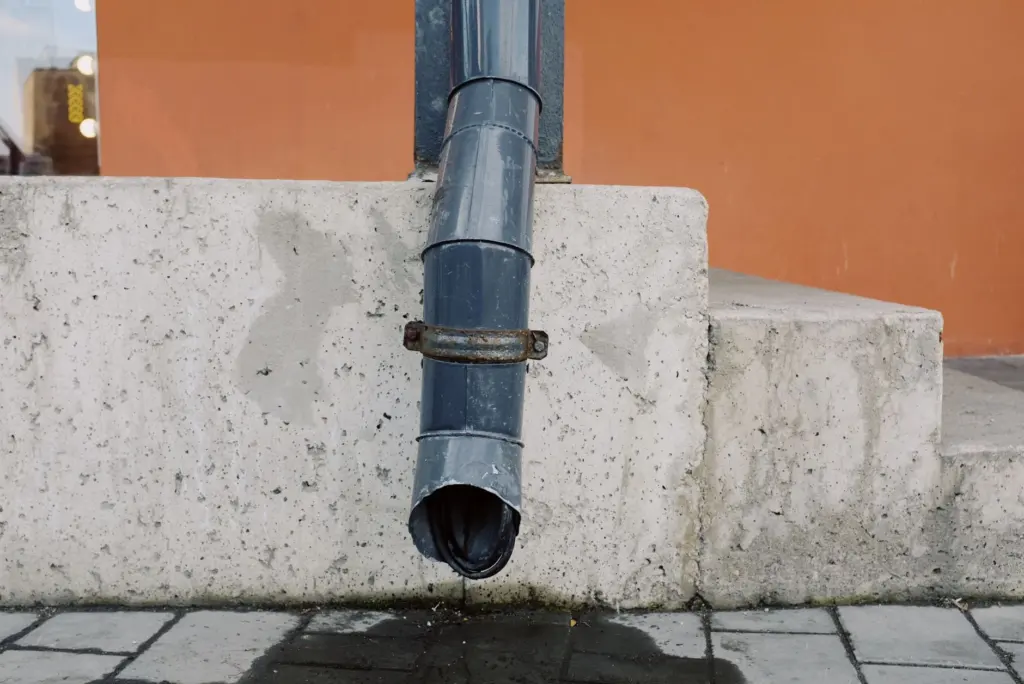
If water still pools or leaves the property after these two changes, move up a rung. If the problem is gone, stop here.
Second rung: add a rain barrel
A rain barrel catches roof water at a downspout and releases it later. Piedmont Master Gardeners note that a barrel typically holds 40 to 60 gallons. They add that only ¼ inch of rainfall on an average-size roof will fill a 55-gallon barrel.
A barrel therefore fills in light rain and is a small buffer, not a flood defence. Its main uses are to hold a little roof water for garden use and to smooth the first part of a storm.
Can rainwater harvesting reduce flooding? Yes, within limits. The municipal program describes rainwater capture as a way to reduce peak stream flows that cause flooding. That benefit comes from many properties holding water back, so a single barrel contributes only a little.
Because a barrel fills so fast, the overflow route matters more than the barrel. The extension guidance says the overflow should be directed away from the house. Pointing it to a landscaped area, or later to a rain garden, keeps the stored water from becoming a new problem.
Third rung: check the site and soil for a rain garden
A rain garden is a shallow planted basin that is dry most of the time and holds water after a rain, according to the University of Nebraska–Lincoln Extension. It suits yards where disconnected downspouts or barrel overflow still deliver more water than the lawn absorbs. It is a poor fit where the site fails any checkpoint below.

| Checkpoint | Value | Planning use |
|---|---|---|
| Distance from house | At least 10 feet | Keeps concentrated water away from the foundation, so place the basin beyond this line. |
| Distance from septic system | At least 25 feet | Never build directly over the septic system. |
| Distance from wellhead | 25 feet | Rules out sites near a well. |
| Land slope | Select another site if over 12 percent | A steep slope is a stopping condition for that location. |
| Water table | At least 2 feet below the soil surface | Shallow groundwater leaves nowhere for the stored water to go. |
| Soil infiltration rate | 0.25 inches per hour or greater | Slower soil will not empty the basin in time. |
These figures come from UNL Extension’s rain garden guidance, which describes the infiltration rate as the soil property that lets the garden drain in 24 to 48 hours.
Run the bucket test
The same guide offers a simple field test. Dig a hole 6 inches deep, fill it with water and time the drain. If the water drains away in less than 24 hours, the soil is suitable. UNL advises doing the test in spring or the typical rainy season, not in mid-summer or fall, so the soil is not unusually dry or wet.
If the hole drains too slowly or the site fails a checkpoint, try another spot in the yard. If no spot passes, skip to the alternatives at the end.
Size and mark the rain garden
How big should a rain garden be? It depends on how much water arrives. Piedmont Master Gardeners explain that sizing is based on the surface area of the impermeable surfaces, such as roofs and pavement, supplying the water. Measure the roof and paved area that will drain into the basin, then use a local extension or municipal sizing guide for the exact ratio. A roof with two downspouts needs more basin than a small garage.
Depth is the other dimension. UNL gives a typical depth of 4 to 8 inches, not to exceed 8 inches, so extra storage should come from a wider footprint, not a deeper hole.
Mark the outline with stakes and string or a hose before digging. Check that the marked area sits clear of the distances in the table and that the incoming downspout or barrel overflow can reach it.
Dig the basin
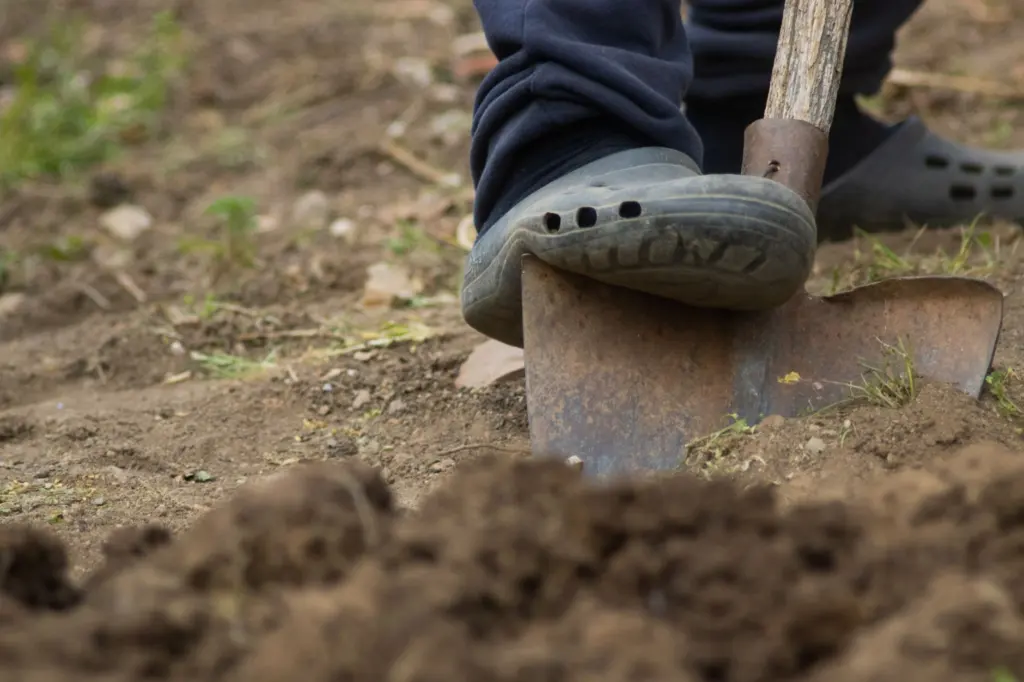
Remove the turf and excavate to the planned depth inside the marked outline. Keep the final depth within the 4 to 8 inch range from UNL Extension, and check the bottom still sits well above the water table.
Connect the inflow before planting. A disconnected downspout or barrel overflow should enter at the basin edge so water spreads into it instead of running past.
Choose rain garden plants
Rain garden plants must cope with both a brief soaking and dry spells between storms. UNL Extension lists perennials, ornamental grasses and woody shrubs adapted to wet and dry conditions as the working plant mix. Native plants are a natural place to start within those groups, and a local extension office or native-plant nursery can name which suit your area.

Mix heights and bloom times so the basin looks planted rather than empty between storms. Place the plants most tolerant of wet conditions at the lowest point and the more drought-tolerant ones at the rim.
When to stop or switch to another option
Stop at the lowest rung that works. A yard with one disconnected downspout rarely needs more. A site with a steep slope, slow soil or a high water table does not suit a rain garden, and a different approach is better than forcing it.
Engineered options handle some of these sites. The municipal program lists permeable pavements and bioretention facilities as systems that slow, filter and cleanse stormwater runoff. Replacing impervious paving with permeable pavement addresses runoff at the hard surface itself. A bioswale is a related green-infrastructure choice for conveying and treating water along a slope.
Homeowners who want to treat the roof itself can look at a green roof on a house. Reusing household water is a separate project, covered under a greywater system for home reuse.
Frequently asked questions
Do I need a permit for stormwater projects?
Possibly. Penn State Extension advises checking with the local municipality to find out what permits may be required before building.
How long should water stand in a rain garden?
UNL Extension says a properly designed rain garden should drain in 24 to 48 hours, with standing water disappearing in less than 48 hours. Piedmont Master Gardeners allow a window of 2 to 4 days. Water that lingers beyond the longer window points to slow soil or a poor site.
How much does a rain barrel cost?
Piedmont Master Gardeners put the average cost of a commercial rain barrel at $120 to $160 depending on size. They also mention a local utility offering a $30 rebate on newly purchased barrels, limited to two per household, so check for a similar programme locally.
Can I use rain barrel water for drinking or bathing?
No. The same extension guidance says barrel water is not treated and should not be used for cooking, drinking or bathing. Use it on garden beds instead.